
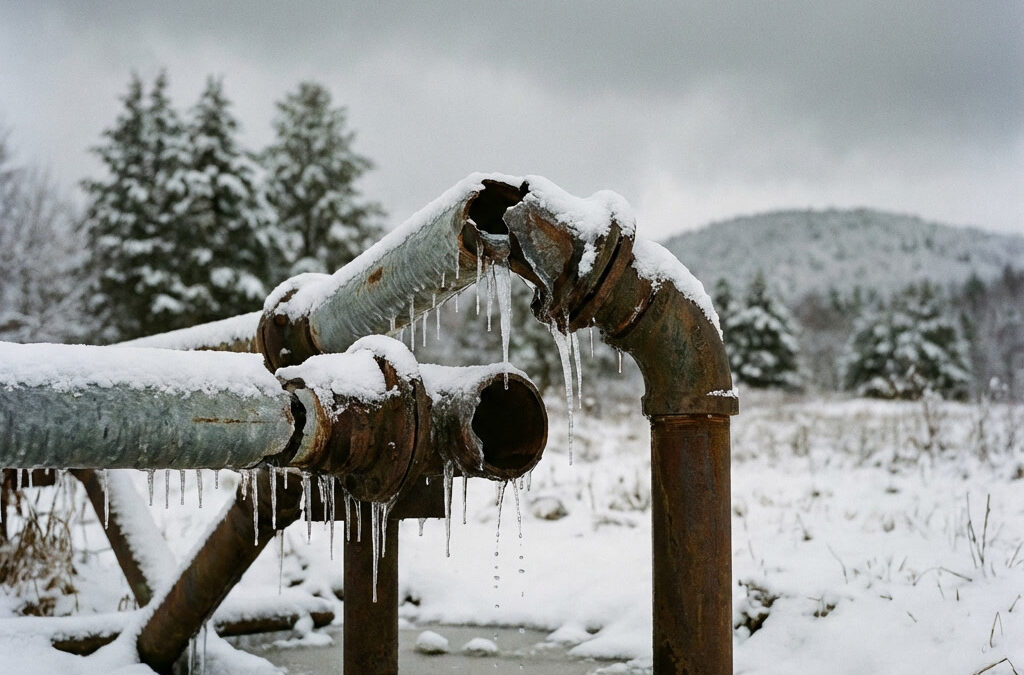
Protecting your home and pipes during a hard freeze is one of the smartest things you can do as a North Georgia homeowner. A few simple steps now can save you thousands of dollars in water damage and emergency plumbing repairs later.
Why Pipes Freeze And Burst
When temperatures drop below freezing, the water sitting inside your pipes can turn to ice. As water freezes, it expands and puts enormous pressure on the pipe walls. The pipe usually does not split where the ice forms. Instead, the pressure forces a crack to open somewhere else along the line, and when things thaw, that crack can send water pouring into your home.
The most at-risk pipes are:
-
Lines in unheated crawl spaces, attics, and garages
-
Pipes in exterior walls, especially on the north side of your home
-
Outdoor hose bibs and any exposed plumbing
If you have an older home or a house with additions that were closed in over time, you are even more likely to have vulnerable sections of pipe hiding behind walls or under floors.
Step One: Protect Outdoor Plumbing
Start outside. That is where most freeze-related problems begin.
-
Disconnect all hoses from outdoor faucets. A hose left attached can trap water and cause the faucet and the connected pipe to freeze and burst.
-
Drain and store hoses in a garage or shed.
-
Install insulated faucet covers on all outdoor spigots. These are inexpensive and very effective when temperatures drop.
-
If you have a dedicated shut-off valve for outside faucets, turn it off and open the exterior faucet to let any remaining water drain out.
If you have an irrigation system, have it professionally winterized or follow the manufacturer’s instructions to blow out the lines. Sprinkler piping is thin and shallow, which makes it very vulnerable to freezing.
Step Two: Insulate Vulnerable Indoor Pipes
Next, turn your attention indoors.
Walk your home and look for any exposed pipes in:
-
Crawl spaces
-
Basements
-
Garages
-
Utility rooms
-
Under sinks that sit on exterior walls
Wrap these pipes with foam pipe insulation. It is cheap, easy to install, and can make the difference between a minor inconvenience and a major disaster. Pay special attention to bends, joints, and areas near vents or drafts.
If you know you have plumbing in exterior walls that has frozen before, consider:
-
Leaving cabinet doors under sinks open during freezing weather so warm air can circulate
-
Adding temporary insulation on the inside of cabinet backs (foam board, for example) to reduce cold transfer from the wall
Step Three: Keep Water Moving
Moving water is much harder to freeze than standing water.
When a hard freeze is in the forecast:
-
Let a small, steady trickle of cold water run from faucets served by vulnerable pipes, especially at night when temperatures are lowest.
-
Focus on the furthest fixture from where your water line enters the home, and any sinks on exterior walls.
Yes, this uses a little extra water, but it is far cheaper than repairing a burst pipe and fixing water damage in drywall, floors, and cabinets.
Step Four: Maintain Indoor Heat
Even if you are trying to save on heating costs, freezing weather is not the time to let your home get too cold.
-
Keep your thermostat at a consistent temperature, day and night, during a freeze. Sudden drops increase the risk of a pipe freezing.
-
If you will be away, do not turn the heat off. Keep it set at 55 degrees or higher.
-
Close windows and doors to unheated spaces and seal obvious drafts.
If you have rooms that tend to stay colder, like over-garage bonus rooms or sunrooms, consider using space heaters safely (with clear space around them and never left unattended) to keep those areas above freezing.
Step Five: Know How To Shut The Water Off
Every homeowner should know exactly where the main water shut-off is and how to operate it.
-
Find your main shut-off valve now, before there is a problem.
-
Make sure it turns easily. If it does not, have it serviced or replaced.
-
Show other adults in the home how to shut the water off in an emergency.
If a pipe does burst, turning off the main water supply quickly can limit the damage dramatically. Once the water is off, open faucets to relieve pressure and call a plumber.
What To Do If A Pipe Freezes
If you turn on a faucet and only get a trickle, you might have a frozen pipe.
-
Leave the faucet slightly open.
-
Gently warm the suspect section of pipe with a hair dryer, heat lamp, or warm towels.
-
Never use an open flame or high-heat device.
If you cannot access the pipe, do not know where the frozen section is, or suspect the pipe has already burst, call a professional immediately. Trying to guess or force the thaw can make the problem worse.
A Little Prep Goes A Long Way
Protecting your pipes during a freeze is about being proactive: insulate, disconnect, drip water, keep the heat steady, and know your shut-off valve. These simple steps can mean the difference between a normal cold snap and a flooded kitchen or crawl space.
If you want a pre-freeze plumbing checkup or have a pipe that has already frozen or burst, call your local plumber before the next cold front hits.